
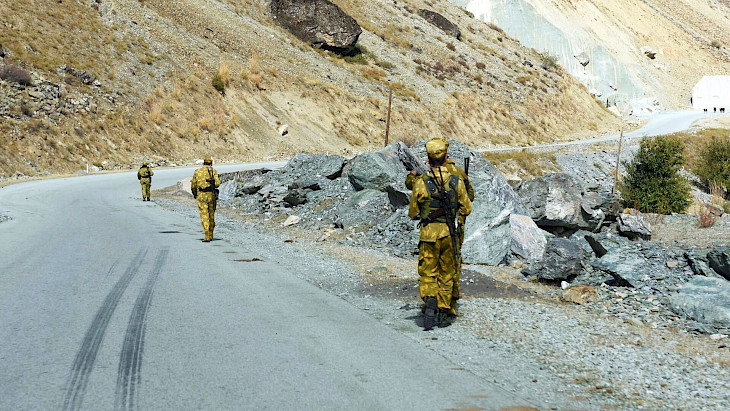
At the end of November 2025, a series of incidents on the Tajik-Afghan border resulted in the deaths of five Chinese citizens, Eurasiatoday.ru reports. The events occurred amid a gradual improvement in relations between Tajikistan and Afghanistan.
On November 26, the first-ever drone attack from Afghan territory on Tajikistan was recorded, killing three Chinese nationals.
In the night of December 1, in the Darvoz district of Tajikistan’s Gorno-Badakhshan Autonomous Region, two more Chinese workers were killed in an armed attack from Afghanistan.
The Taliban responded promptly, condemning the killings and stating that the responsibility lies with “groups seeking to sow chaos, instability, and undermine trust between countries in the region.”
The incidents occurred against the backdrop of improving bilateral relations after a four-year period of tension. Tajikistan was among the last Central Asian countries to maintain a skeptical stance toward the Taliban government, making the thaw strategically significant.
The situation was further complicated by a statement from Pakistan’s Foreign Minister Ishaq Dar, who blamed Afghan authorities for failing to fulfill counterterrorism agreements and confirmed that Islamabad had considered a potential ground operation.
Experts note that the killings of Chinese citizens cannot be viewed in isolation: Beijing actively invests in infrastructure projects in Central Asia, including transport corridors under the Belt and Road Initiative. The attacks may be aimed at undermining China’s economic presence in the region.
At the same time, the events coincide with Afghanistan’s attempts to end its international isolation, while regional actors are reassessing their approaches to engagement with the Taliban. Border provocations may be intended to disrupt this process and maintain instability.
Analysts assess that actions on the Tajik-Afghan border could serve multiple purposes simultaneously:
- Containing the strengthening of Taliban-led Afghanistan and its alignment with China and Central Asia;
- Strengthening the positions of internal Afghan opponents of the Taliban, including ISIS-Khorasan;
- Using the Afghanistan conflict by external actors as a tool for strategic pressure on China and Russia.
CentralasianLIGHT.org
December 1, 2025