
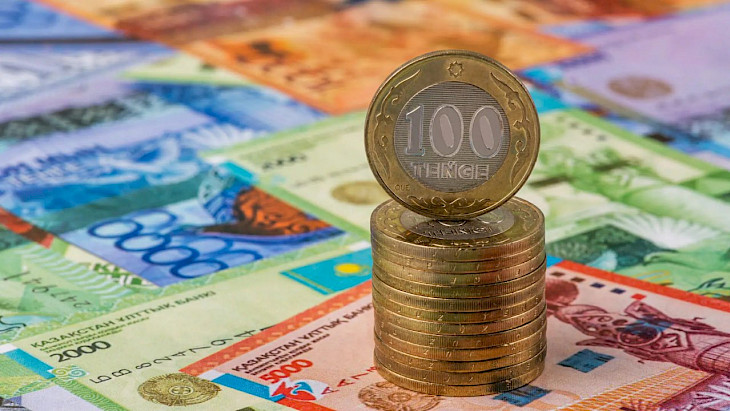
The Kazakh tenge continues to strengthen, but at the same time the population’s interest in foreign currency is growing, Zakon.kz reported.
According to a demand study, in August, residents of the country bought 141.4 billion tenge more dollars than they sold, and the net purchase of rubles reached about 6.2 billion tenge. The demand for Russian currency has changed especially sharply: compared to July, its net sales have increased by more than 49 times.
At the same time, the dynamics of the tenge exchange rate looks opposite. The official dollar exchange rate fell from 502.27 tenge on January 28 to about 441.88 tenge at the end of September. According to the National Bank, in August alone, the tenge strengthened by 2.6%, to 461.57 tenge per dollar. At the same time, the regulator did not conduct foreign exchange interventions.
The strengthening of the tenge is supported by several factors: a favorable situation in the oil market, high yields of tenge instruments, sales of foreign currency from the National Fund and the policy of the National Bank. At the same time, the regulator notes that the strengthening of the national currency is already having a disinflationary effect: in August, annual inflation dropped to 9.8%.
The paradoxical increase in dollar purchases against the backdrop of a strong tenge has an important explanation. The population reacts not only to the current exchange rate, but also to expectations of its future changes. When the dollar becomes cheaper, some citizens perceive this as an opportunity to purchase currency at a lower price. Therefore, high demand for the dollar does not necessarily mean lack of confidence in the tenge.
The ruble is especially indicative. More than 60% of the increase in its net sales was provided by Pavlodar, East Kazakhstan, Karaganda and Kostanay regions - regions closely connected with trade and economic flows with Russia.
Thus, the current situation shows both the strengthening of the tenge and the preservation of currency diversification of the population’s savings. The strong tenge is currently supported by fundamental factors, but further dynamics will depend on oil prices, tax revenues, foreign trade, the Russian ruble and decisions of the National Bank. The regulator itself maintains a flexible exchange rate setting mode.
CentralAsianLIGHT.org
September 28, 2026