
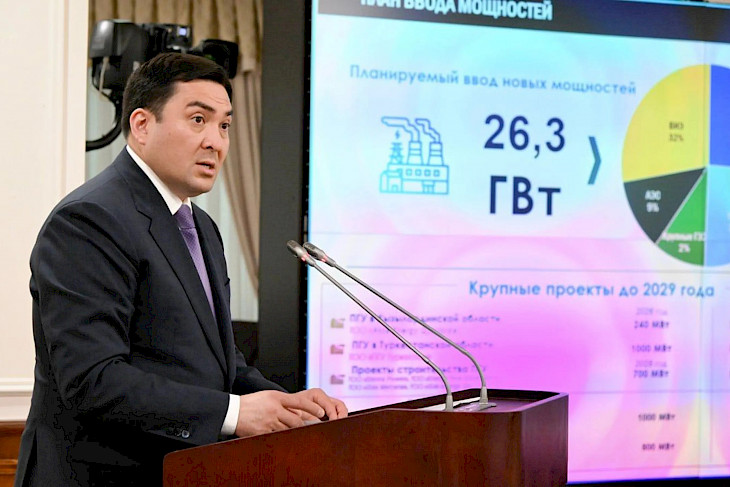
Kazakhstan expects to fully cover its domestic electricity needs by the beginning of 2027 and achieve a sustainable surplus by the end of that year. This was announced by Energy Minister Yerlan Akkenzhenov at a government meeting on July 28, 2026, Zakon.kz reported.
As part of the national project, the country plans to commission new generating capacity with a total capacity of 7.3 GW by 2029, costing 6.2 trillion tenge. A number of facilities are expected to launch in 2027, including gas turbine units at the Zhambyl State District Power Plant and a combined-cycle plant at the Moscow Electric Power Company (MAEK). According to the minister, by 2029, Kazakhstan will have built a stable power reserve and increased its electricity export potential.
Commentary
Kazakhstan's energy program reflects the country's desire to transition from a deficit-based electricity supply model to a sustainable energy balance.
Rapid economic growth, industrial development, and increased regional consumption require significant investment in generation and infrastructure. The commissioning of new capacity will reduce dependence on aging power plants and improve the reliability of the national energy system.
Creating a 20% capacity reserve is particularly important, allowing Kazakhstan to not only meet the domestic market but also expand electricity exports to neighboring countries.
However, the implementation of this large-scale project will depend on timely financing, effective construction management, and network modernization. Reducing the depreciation of energy infrastructure will be a key factor in the long-term sustainability of the sector.
CentralasianLIGHT.org
July 28, 2026