
Kyrgyzstan's Minister of Finance Almaz Bakaev discussed the country's economic development prospects and the effectiveness of public investment management with a delegation from the International Monetary Fund (IMF), reports Akchabar.kg.
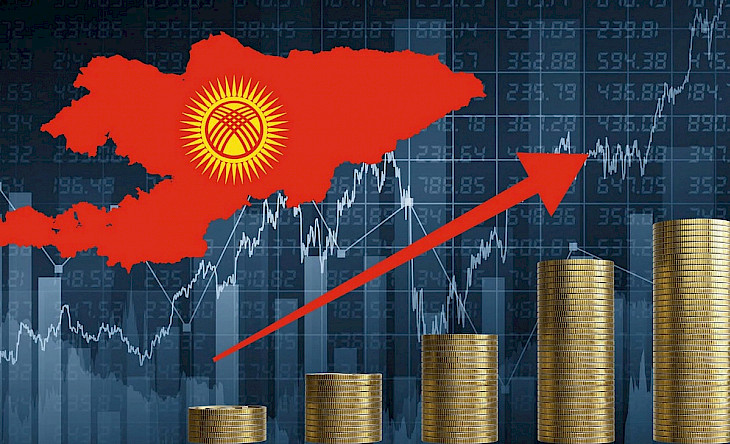
The talks took place against a backdrop of positive macroeconomic performance: preliminary data indicates that Kyrgyzstan's GDP reached $16.2 billion in 2025, posting 6.1% year-on-year growth. Inflation slowed to 4.8%, returning to the National Bank's target range, while gold and foreign exchange reserves increased to $3.1 billion.
However, structural challenges persist:
- Public debt stands at approximately 43% of GDP—within sustainable limits but requiring prudent management;
- A budget deficit of 3.2% of GDP is financed through external borrowing and grants;
- Remittances from labor migrants—exceeding $2.3 billion in 2025—continue to play a crucial role in supporting the balance of payments.
During the meeting, Almaz Bakaev outlined the government's strategic objective: to expand the country's GDP to $30 billion by 2030. "Achieving these ambitious targets critically depends on support from financial institutions, including the IMF," the Minister emphasized.
IMF experts presented preliminary findings from their assessment of Kyrgyzstan's public investment management system using the PIMA methodology (Public Investment Management Assessment). This tool evaluates the efficiency of the investment cycle—from strategic planning through project implementation and monitoring.
Following the assessment, experts noted positive trends in domestic investment growth, creating potential for accelerated development. Key recommendations include:
- Strengthening inter-ministerial coordination during infrastructure project selection;
- Implementing a unified digital platform for monitoring public investments;
- Enhancing transparency in procurement and auditing of major construction projects.
Finance Minister Bakaev expressed agreement with the experts' conclusions and confirmed that the Kyrgyz government is already actively working to attract financial resources for large-scale infrastructure initiatives—spanning energy, transport, and beyond.
Focus areas include initiatives with high socio-economic returns: power grid modernization, road construction, irrigation system development, and digitalization of public services. Improved investment management quality is expected to boost donor confidence and reduce borrowing costs for Bishkek.
The next round of consultations with the IMF is scheduled for Q2 2026.
CentralasianLIGHT.org
March 3, 2026