
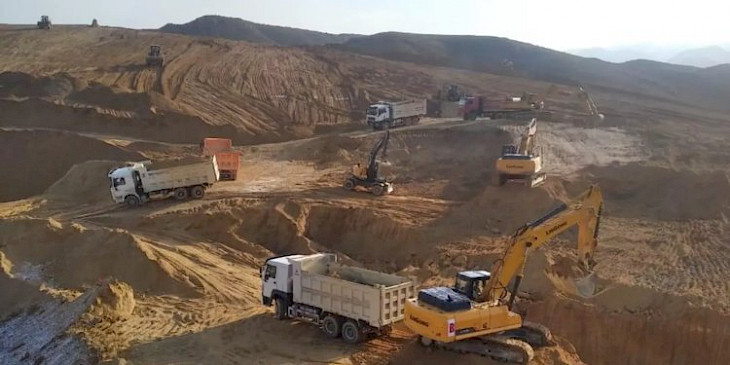
Rosatom State Corporation and the Ministry of Industry and Trade of Tajikistan signed a protocol to conduct surveys and update the feasibility study for the reclamation of the Digmai tailings dam (Buston), which holds 45 million tons (out of the country's 55 million tons of uranium waste), Avesta.tj reported.
According to Deputy Minister Aziz Nazar, reports to government representatives will be prepared by the summer of 2027, and practical work will begin in 2028. This project will be the third phase of cooperation: sites in Istiklol (Taboshar) and Adrasman were previously decontaminated ahead of schedule.
The problem of Soviet uranium legacy remains one of the main environmental threats to the Fergana Valley and all of Central Asia. Hundreds of millions of tons of toxic and radioactive waste have accumulated in the region: in Kazakhstan, the volumes are estimated at tens of millions of tons, in Kyrgyzstan, over 90 hazardous sites are registered (including the critical zones of Mailuu-Suu and Min-Kush), and in Uzbekistan, uranium tailings dumps are concentrated around Yangiabad and Charkesar.
At the same time, the countries demonstrate varying degrees of dependence on a single technical operator. While Tajikistan and Kyrgyzstan are engaging Rosatom and CIS target programs to remediate the most costly sites (such as in Min-Kush and Istiklol), Uzbekistan and Kazakhstan are more actively combining these mechanisms with funding from the EU, EBRD, and IAEA.
Joint work in Digmai reduces the transboundary risks of radioactive contamination of transboundary waterways (such as the Syr Darya), highlighting the region's transition to pragmatic interstate environmental risk management.
CentralasianLIGHT.org
October 5, 2026