
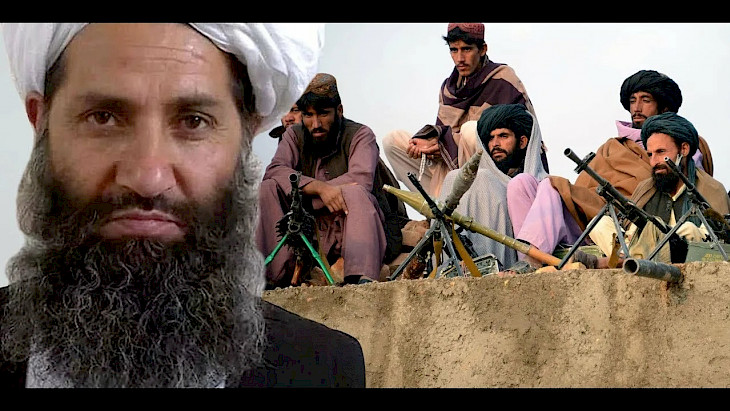
Hibatullah Akhundzada, the Taliban leader, has repeatedly warned that internal divisions pose the greatest threat to the survival of the Islamic Emirate, stressing the need for unity and obedience within the group, the article in Afintl.af says.
His repeated emphasis suggests Akhundzada does not see the Taliban’s potential collapse as the result of Western pressure or domestic opposition to his hardline policies, but rather as a consequence of internal discord.
The BBC World Service said it obtained an audio recording in which Akhundzada warns a gathering of Taliban officials that “the Emirate will collapse” if internal divisions persist. The recording relates to a speech delivered in January 2025 at a jihadi seminary in Kandahar.
Although the Taliban have consistently denied the existence of internal rifts, remarks by senior figures including Akhundzada himself and Sirajuddin Haqqani, the interior minister point to growing tensions within the group.
In one recent speech in Khost province, Haqqani said a government that rules through “fear and force” is not a genuine government, implicitly acknowledging the Taliban’s reliance on intimidation and violence. He urged members not to humiliate or denounce one another, saying effective governance requires trust and affection between rulers and the public.
A day later, Neda Mohammad Nadeem, the Taliban’s minister of higher education, warned that disobedience or opposition to Akhundzada would weaken the system. He said an Islamic system can have only one emir and that the existence of “multiple emirs” would lead to corruption and failure. Nadeem is widely regarded as one of Akhundzada’s closest allies in Kabul.
Kabul-Based vs Kandahar-Based Factions
Afghanistan International has previously reported extensively on internal Taliban divisions. In October 2025, sources said a nationwide internet shutdown was ordered by Akhundzada. After 48 hours of widespread disruption including the paralysis of public services and Taliban offices Prime Minister Hasan Akhund ordered internet access restored. One source described the episode as a direct confrontation between Kabul-based and Kandahar-based Taliban factions.
A recent BBC report confirmed that the prime minister ordered the restoration following pressure from Kabul-based ministers. The report described two competing camps within the Taliban: a Kabul-based group of ministers and senior officials favouring limited engagement with the outside world, and a Kandahar-based faction loyal to Akhundzada that prefers international isolation. Both support strict enforcement of Islamic law, but differ sharply on foreign relations and governance.
According to the report, the October 2025 decision to restore internet access reflected the very concern Akhundzada had voiced months earlier that certain individuals were threatening the unity of the Emirate.
A Reclusive Leader
People who have attended meetings with Akhundzada told the BBC he rarely speaks and often communicates through gestures, interpreted by a group of elderly clerics present. They said he covers his face including his eyes with a scarf even at large gatherings. Photographing him is banned, and only two images of the Taliban leader have ever been made public.
One Taliban official said meeting Akhundzada is extremely difficult, while another said ministers sometimes wait days or weeks for an audience. Kabul-based ministers have reportedly been instructed to travel to Kandahar only if they receive a formal invitation.
The BBC World Service said it interviewed around 100 people including current and former Taliban members, local sources, analysts and former diplomats for its report, published on Thursday, January 15, examining internal divisions within the Taliban.
CentralasianLIGHT.org
January 16, 2026