
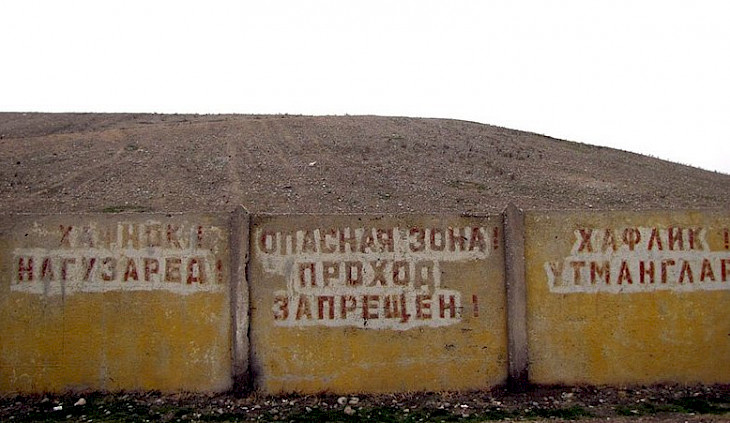
The International Atomic Energy Agency published a new Strategic Policy Framework for January 2026, expressing concern about the state of uranium tailings dumps in Tajikistan. The main problem identified is Tajikistan's serious shortage of funds needed to render hazardous sites safe, Asiaplus.tj reports.
According to the IAEA, 10 tailings dumps are located in the country's Sughd region, where approximately 55 million tons of radioactive waste have accumulated. These materials occupy an area of 170 hectares, and their total radioactivity exceeds 6,500 curies.
The most problematic areas are located near the settlements of Istiklol, Buston, and Adrasman, and in the Bobojon Gafurov district. IAEA specialists point out that this waste does not pose a direct threat as long as the protective structures remain intact. In the event of erosion, landslides, or structural deterioration, there is a risk of radioactive substances leaking into soil and water resources, damaging ecosystems and public health.
Although cooperation with Tajikistan, Kyrgyzstan, and Uzbekistan on uranium site cleanup has been extended until 2030, implementation of the programs is dependent on the availability of funds. According to IAEA estimates, €210 million is needed to remediate uranium legacy waste in Central Asia. To date, international donors have allocated only €113 million, creating a funding gap of almost €100 million.
The agency notes that without additional investment from key financial institutions, such as the European Bank for Reconstruction and Development, the implementation of planned projects in Tajikistan remains uncertain.
The problem of radioactive waste in Tajikistan arose during the period of active uranium mining, which took place from 1945 to 1993 at the Taboshar and Adrasman deposits. After the closure of these mines, the country was left with abandoned mines and waste rock dumps. Many of these facilities were designed in the mid-20th century without regard for modern seismic and hydrological safety standards.
During the last IAEA meeting, Tajikistan called on the international community to intensify efforts to restore these territories to ensure long-term radiation safety in the region.
CentralasianLIGHT.org
January 20, 2026