
Central Asia This Week: Security Diplomacy, Energy Ambitions and the Search for New Partners (November 2–8, 2026)
Central Asia ended the first full week of November as a host and an organiser of international agendas. Astana staged a summit on artificial intelligence and security that drew four of the region's presidents and the King of Jordan. Ashgabat received envoys from Washington and Tehran within forty-eight hours. Tashkent offered to house a United Nations counterterrorism office. Beneath the diplomacy, the week's news returned again and again to one theme: energy, minerals and infrastructure as the currency of the region's relations with the outside world. A ruptured fuel supply chain from Russia, a European push for critical minerals and a string of investment deals from Bukhara to Issyk-Kul showed governments trying to turn geography and resources into leverage.
Astana as a convenor
The week's central political event was the Aqaba Process summit in Astana on November 6, the first round of the Jordanian-led counterterrorism platform devoted to artificial intelligence. Kazakhstan's President Kassym-Jomart Tokayev hosted King Abdullah II together with Tajikistan's Emomali Rahmon, Turkmenistan's Serdar Berdimuhamedov and Uzbekistan's Shavkat Mirziyoyev. Azerbaijan's parliamentary speaker and Kyrgyzstan's foreign minister also attended. The leaders discussed how generative tools, deepfakes and automated propaganda could serve recruitment and terrorist financing, and how to prevent radicalisation among young people.
The summit was preceded on November 5 by Tokayev's bilateral talks with the Jordanian king, at which the two exchanged state orders and agreed to deepen security cooperation. For Astana, gathering four Central Asian presidents around a Middle Eastern monarch was a statement of ambition: Kazakhstan wants to be seen as a place where new security agendas are set, not merely received.
Uzbekistan used the platform to advance its own proposals. Mirziyoyev offered to host a regional office of the UN Office of Counter-Terrorism. The office would help Central Asian states flag terrorist content online, trace terrorist financing and apply AI tools in counterterrorism work. He also proposed an international programme, "Enlightenment Against Ignorance in the Digital Age," based at the Centre of Islamic Civilization in Tashkent, and backed the UN Global Dialogue on AI Governance.
The initiative came in the same week that Uzbekistan tightened its own legislation. A law dated November 2 replaces the term "religious extremism" with the broader "extremism." It creates a public register of extremist organisations, materials and websites and sets prison terms of five to ten years for joining an extremist group. Together, the two moves show Tashkent presenting itself abroad as a partner in digital-era security while widening the state's legal toolkit at home.
Rahmon's presence in Astana had a bilateral dimension as well. His official visit to Kazakhstan on November 5–7 was accompanied by a business forum at which Tajik and Kazakh companies signed 11 agreements worth $135.3 million. The deals covered trade, industry, agriculture, IT and renewable energy, an area where hydropower-rich Tajikistan and coal-dependent Kazakhstan complement each other. In parallel, Rustam Emomali, chairman of Tajikistan's upper house and mayor of Dushanbe, held talks with Mirziyoyev in Tashkent on November 4. They discussed trade, freight and a parliamentary cooperation road map for 2027–2028. The two strands of Tajik diplomacy point in the same direction: Dushanbe is investing in its relations with both of its larger neighbours.
Ashgabat between Washington and Tehran
Turkmenistan, which marks the 31st anniversary of its permanent neutrality in December, had one of its busiest diplomatic weeks of the year. On November 2, Foreign Minister Rashid Meredov received Iran's Foreign Minister Abbas Araghchi. They discussed bilateral ties and regional issues across a 1,100-kilometre shared border, over which Iran imports Turkmen electricity. A day later, Gurbanguly Berdimuhamedov, chairman of the Halk Maslahaty, met US Assistant Secretary of State Paul Kapur. The talks covered energy, transport and logistics, with the TAPI pipeline and trans-Caspian links on the agenda. Kapur thanked Ashgabat for co-chairing the C5+1 secretariat in 2025–2026.
Hosting senior officials from Tehran and Washington within days of each other is a practical illustration of what Turkmen diplomacy calls "active neutrality." Ashgabat avoids choosing between rival powers while trying to extract economic benefit from all of them.
That economic agenda was on display at the CIET-2026 exhibition and conference in Ashgabat on November 3–5, which drew more than 800 delegates from 60 countries. Turkmen state bodies signed 15 memoranda with 14 companies from 10 countries, including Zaha Hadid Architects, Denmark's Topsoe, South Korea's Samsung E&A and five German firms. On the sidelines, Deputy Energy Minister Serdar Saparov revealed preliminary talks with foreign companies on building high-performance data centres. These would run on surplus electricity from a system of 11 power plants with more than 6,500 MW of installed capacity. On November 5, the head of France's Bouygues group received a jubilee medal marking the anniversary of Turkmen neutrality, a reminder of the French firm's long role in building Ashgabat's marble skyline.
The country's environmental record also drew attention. More than 35 specialists from Turkmengas, Turkmennebit and government agencies completed UNEP training on detecting methane leaks by satellite, under an EU-funded project. Turkmenistan's gas fields have repeatedly been identified as a source of methane "super-emitter" events, and the training is part of its commitments under the Global Methane Pledge.
Energy shocks and new suppliers
If one story captured the region's economic vulnerability this week, it was Uzbekistan's fuel problem. Gazeta.uz reported that Uzbekneftegaz is negotiating with Chinese companies, including PetroChina, on petrol, diesel and crude supplies. Russian deliveries have collapsed: Russia once provided 85–90% of Uzbekistan's petrol imports, but monthly imports fell from about 141.8 million litres in April to 11.4 million in August. Over the same months the average import price rose from about $576 to nearly $995 per 1,000 litres. The Energy Ministry linked the decline to shutdowns at Russian refineries hit by Ukrainian drones. The war in Ukraine is thus reshaping fuel flows across Central Asia and pushing Tashkent toward Beijing.
Uzbekistan's medium-term answer is to refine more at home. Uzbekneftegaz held talks with France's Axens and Technip and China's CPECC on doubling the capacity of the Bukhara refinery from 2.5 million to 5 million tonnes a year. Each company was asked to submit proposals within a week. Nearby, the Uzbek-Canadian joint venture Tekhnochem confirmed a $420 million investment programme in its Bukhara petrochemical cluster. The programme includes a $250 million aromatic hydrocarbons plant planned for 2027–2028. In Namangan, regional authorities signed a $105 million agreement with Italy's Gamma Meccanica.
Elsewhere, hydropower and renewables dominated. In Tajikistan, Asia-Plus reported that the Rogun reservoir will rise from 1,140 to 1,165 metres in 2027, when the third of six 630 MW units is due to start. The plant's two operating units have already produced more than 11 billion kWh. Kyrgyzstan's Green Energy Fund said projects worth about $500 million have been commissioned this year. The first 100 MW phase of a 250 MW solar plant in Naryn region is due in 2027. The urgency is real: on October 30, Kyrgyz daily electricity consumption hit 66 million kWh, 29% higher than a year earlier.
Minerals: Europe's bet and Bishkek's resource nationalism
At the end of the week, CentralasianLIGHT.org highlighted Europe's growing interest in the region's critical minerals. The European Union imported about 98% of its rare earths from China in 2025. It is now looking to Kazakhstan and Uzbekistan for long-term partnerships, with processing done locally rather than exporting raw ore. Central Asia holds an estimated 1.2 million tonnes of rare earth reserves and roughly 39% of global manganese ore reserves. Azerbaijan is being discussed as a transit route.
That route depends on the Caspian, and the week brought progress there too. On November 2, Kazakhstan's Samruk-Kazyna and Azerbaijan's AZCON Holding signed agreements on a "Super Ferry" project between the ports of Kuryk and Alat and on a joint venture for an intermodal terminal at the Port of Baku. The Middle Corridor, long a slogan, is gradually acquiring ferries, terminals and balance sheets.
Kyrgyzstan moved in a different direction. President Sadyr Japarov announced that three gold deposits in Talas region, Taldy-Bulak, Andash and Bala-Chychkan, will be developed by the state company Kyrgyzaltyn without foreign investors. Recent amendments already require a mandatory 30% state stake in all mining projects. During the same trip, Japarov opened the Talas Arena stadium and announced a 350-bed regional hospital. Bishkek is betting that state control over resources can fund visible social investment ahead of the presidential election.
Kyrgyzstan's infrastructure plans also drew Chinese interest. K-News reported that BYD discussed an elevated monorail for Bishkek with Bakyt Torobaev, the president's special representative. No cost or route has been announced. Construction of the Tamchy special financial zone on Lake Issyk-Kul is also advancing.
Accountability at home
Domestic politics produced two stories that may shape the coming months. In Kazakhstan, the special commission inspecting the Ministry of Defence released interim findings. It has inspected more than 104 military facilities, and 37 cases have been sent to criminal prosecution authorities. Tokayev set up the commission after 14 servicemen died during exercises in the Caspian Sea in September. Its recommendations feed into a Military Reform Plan approved by the Security Council in October. At Samruk-Kazyna, Prime Minister Olzhas Bektenov welcomed a 19% rise in net profit but criticised missed deadlines on major projects. The fund is reviewing 69 large projects worth 43.8 trillion tenge.
In Kyrgyzstan, attention is turning to the presidential election scheduled for January 27, 2027. 24.kg reported that the OSCE's Office for Democratic Institutions and Human Rights is considering sending an observation mission. Its advisers met the Central Election Commission in Bishkek. Kyrgyzstan remains one of the few Central Asian states with a record of competitive presidential races, and a full ODIHR mission would put the vote under close Western scrutiny.
Society and culture
Not all of the week's news concerned power and pipelines. A report by the Eurasian Fund for Stabilization and Development warned that remittances made up about 46% of Tajikistan's GDP in 2025 and that roughly a quarter of its workforce works abroad. It urged Dushanbe to create productive jobs at home. Kazakhstan led Central Asia in the QS Asia 2027 university rankings, with three universities in the regional top 100; Nazarbayev University climbed 62 places. Uzbekistan announced plans to outsource up to 30% of services in state hospitals to private providers.
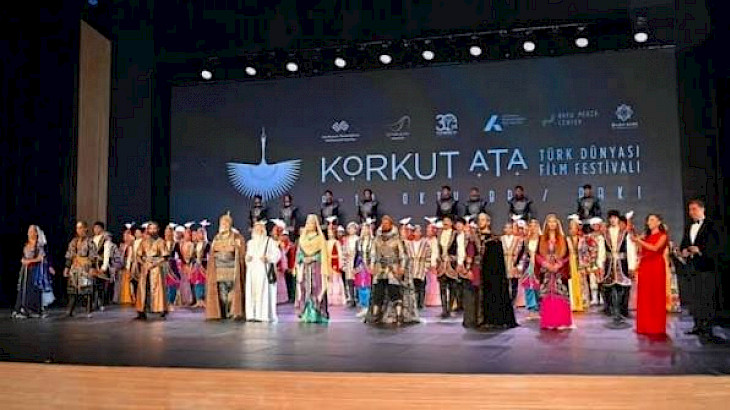
Kyrgyz wrestler Meerim Zhumanazarova became world number one in women's wrestling, and Tajikistan won its first-ever medal at the Asian Para Games. Uzbekistan promoted Silk Road tourism at WTM London, while Turkmen filmmakers took part in the Korkut Ata International Film Festival in Istanbul. Tajik ballet mourned its lead soloist Muhammad Azimzoda.
Outlook
The week showed a region that is more confident in its diplomacy but still exposed to shocks it does not control. Russian refinery outages leave Uzbek petrol stations short of fuel. China's export restrictions turn Central Asian manganese into a European priority, and a Middle East crisis echoes in Caspian shipping. Governments are responding by diversifying suppliers, partners and routes. Over the coming weeks, watch whether the Bukhara refinery talks produce a contract, whether the Super Ferry agreements move to financing, and whether ODIHR confirms a mission to Kyrgyzstan.
CentralasianLIGHT.org,
November 8, 2026