
Central Asia spent this week at the crossroads of great-power diplomacy. The leaders of China, Russia and the United States met for the first time in a three-way format in Shenzhen. Within hours, Russian President Vladimir Putin flew on to Dushanbe, and Russia’s defence minister signed a new cooperation plan in Tashkent. On Turkmenistan’s Caspian coast, the region’s lawmakers gathered for the autumn session of the CIS Inter-Parliamentary Assembly. Underneath the high politics ran a quieter theme: trucks, ports, power lines and pipelines. These are the infrastructure on which Central Asia’s ambitions as a transit region depend.
Shenzhen, Then Dushanbe: Moscow Reaffirms Its Security Role
Russian President Vladimir Putin and Tajik President Emomali Rahmon held talks in Dushanbe on November 20 on military cooperation, regional security, and economic ties. Putin came from the APEC summit in Shenzhen, China, where he had joined a trilateral meeting with Xi Jinping and Donald Trump. Moscow sent its military officials separately: Russian Defence Ministry officials held separate bilateral military talks in Dushanbe, outside the CSTO framework. The two leaders also discussed Russia’s 201st military base in Tajikistan, whose presence is extended until 2042, and exchanged views on Afghanistan. On the economy, Putin said bilateral trade rose by over 25% last year and nearly 19% in January–September 2026. Rahmon called Russia “reliable ally and principal economic partner.”
The same day, Russian Defence Minister Andrei Belousov was in Tashkent. There he and his Uzbek counterpart, Botir Kudratkhodjaev, signed a military cooperation plan for 2027 under a 2026–2030 partnership programme that includes more than 60 joint activities a year. Uzbekistan remains outside the CSTO and any military bloc. Even so, the visit showed that Moscow is pressing its security diplomacy across the region at the very moment it is negotiating with Washington and Beijing.
Kazakhstan, meanwhile, was looking towards Washington. On Wednesday, President Tokayev received Yerzhan Kazykhan, his special representative for relations with the United States, to discuss preparations for Kazakhstan’s participation in the G20 summit in Miami. Kazakhstan will attend at the invitation of US President Donald Trump. Kazakhstan is not a member. Tokayev did not neglect Moscow either. On the same Wednesday, Tokayev met the chairman of Russia’s Supreme Court. The two countries’ supreme courts signed their first-ever cooperation agreement. This is the region’s familiar multi-vector balancing in miniature.
Turkmenistan Moves Closer to the CIS
The most notable political signal came from Avaza. The CIS Inter-Parliamentary Assembly opened its autumn session there on November 19, under Turkmenistan’s 2026 chairmanship of the Commonwealth. On November 20, Gurbanguly Berdimuhamedov, chairman of the People’s Council, told delegation heads that partners could always count on Turkmenistan “as a full member of both the CIS and the Inter-Parliamentary Assembly.” That is a striking phrase from a country that downgraded itself to associate membership in 2005 in the name of permanent neutrality. The session’s 61st plenary adopted a model law against the use of artificial intelligence and robotics for terrorist and extremist purposes, as well as a new concept of a common migration space.
Ashgabat was also busy southwards. Turkmenistan and Pakistan held their Joint Intergovernmental Commission on Economic Cooperation in Islamabad on November 17. Energy was central. The TAPI gas pipeline recently reached the outskirts of Herat, in western Afghanistan. The sides also discussed electricity cooperation along the Turkmenistan–Afghanistan–Pakistan route. The ambitions contrast sharply with the numbers: bilateral trade fell 56% in the first nine months of 2026, according to Pakistani data cited by Trend.
Kyrgyzstan: Growth, Protectionism and Digital Control
Kyrgyzstan opened the week with strong figures. Kyrgyzstan’s GDP grew 10.5% year on year in January–October 2026, reaching 1.866 trillion soms. The growth has costs. Consumer prices and tariffs rose 8.8% from December 2025 to October 2026, and service tariffs rose 12.2%. Osh had the highest price growth at 17.1%. Trade expanded, but trade with the Eurasian Economic Union rose 11.3%, though exports to the bloc fell 8.2%.
Bishkek also reached for protectionist tools. Kyrgyzstan’s Cabinet of Ministers imposed a six-month ban on white sugar imports from third countries and from EAEU member states, citing food security and the needs of domestic beet processors. CentralasianLIGHT.org noted that the ban covers EAEU partners, whose common market is meant to allow free movement of goods. Kazakhstan and Russia are the main sugar suppliers to Kyrgyzstan. The move could therefore become a test of Eurasian integration rules.
A second decision drew sharper debate. The government made state-owned ElCat the country’s sole operator for international internet traffic, with an exclusive, indefinite right. Officials presented this as a matter of “digital sovereignty” and national security. Lawmakers and IT experts warned of a single point of failure, weaker competition and easier website blocking.
On the international stage, Kyrgyzstan continued preparing for its first term on the UN Security Council, which begins on January 1. It held consultations with France on the Council’s agenda. Separately, Kyrgyzstan gained observer status at the Council of Europe’s Convention 108 Committee on personal data protection. The government also moved on transport: Kyrgyz and Chinese officials met in Bishkek to ease trucking through Torugart and Irkeshtam. Cargo through the two crossings rose by half in nine months, driven largely by construction of the China–Kyrgyzstan–Uzbekistan railway. And in Turkmenistan, Turkmen officials offered Bishkek preferential terms at Turkmenbashi port for a route to Europe via the Caspian.
Kazakhstan: Copper, Wheat and Water
Kazakhstan’s economic agenda this week focused on diversification. Kazakhstan plans to double copper production by 2030 and raise copper concentrate output 1.5 times. Today the country produces about 3.4 million tons of copper concentrate a year but processes only 59% of it domestically. Two smelters, each with a planned capacity of 300,000 tons, would be built in Balkhash and Aktogay. Copper is essential for grids, electric vehicles and renewables, so Europe, which treats copper as a strategic raw material, may also be interested.
At the third Forum of Agricultural Workers on November 20, Tokayev urged farmers to reduce dependence on wheat. He noted that this year oilseeds expanded by 1.2 million hectares while grain area shrank. A day earlier, at a round table with heads of international organisations and foreign universities, he called water security “a question of our survival” for Central Asia. He asked academic partners to help with transboundary river management, monitoring and water-saving technology. The new president of the Inter-Parliamentary Union, Australian Speaker Milton Dick, chose Astana for his first foreign visit in that role.
New traffic rules also came into force on November 20. They include a chapter on self-driving vehicles operating in approved zones under remote supervision, and they reclassify electric bicycles as mopeds. Kazakhstan is among the first countries in the region to set legal rules for driverless transport.
Uzbekistan: The Gulf, Turkey and Tourism
Tashkent extended its reach southwards and westwards. Uzbekistan and Oman have raised their ties to a “strategic partnership” after talks between President Shavkat Mirziyoyev and Sultan Haitham bin Tariq Al Said in Muscat. The two countries signed more than 30 agreements covering trade, investment, transport, energy, tourism, agriculture, mining, and digital cooperation. For a doubly landlocked country, Oman’s ports offer a strategic route to the sea.
Back home, Mirziyoyev courted Turkish capital at the first meeting of the Uzbek–Turkish High-Level Council on Business Support. He offered Turkish companies roles in building New Tashkent and stakes in $8.4 billion of state assets scheduled for sale in 2026–2027, including banks. On November 20 he opened a mountain family resort in Parkent district, a 148.5-billion-soum project intended to boost domestic tourism in the Chatkal foothills.
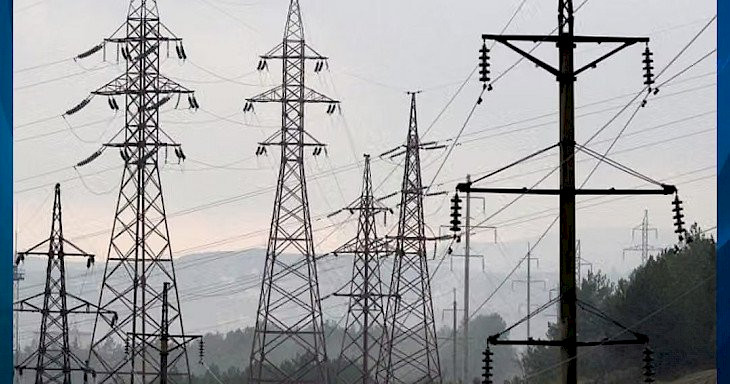
The week also exposed the region’s physical interdependence. A 500 kV transmission tower collapsed in Tajikistan on November 19, cutting the line that supplies electricity from the Syrdarya power plant to the Fergana Valley. Uzbekistan’s Energy Ministry warned of possible supply restrictions in Fergana, Andijan and Namangan regions. The Soviet-era energy ring that links the two neighbours is now both an asset and a vulnerability.
Tajikistan: Glaciers, Transit and Finance
Dushanbe used regional forums to promote its priorities. Tajik Foreign Minister Sirojiddin Muhriddin called for stronger cooperation within the Economic Cooperation Organization (ECO) at the 30th meeting of its Council of Foreign Ministers in Islamabad on November 16. He raised environmental protection and cooperation on glaciers and water resources. As a landlocked country, Tajikistan sees ECO as a platform for transit routes to Pakistani and Iranian ports via Afghanistan, and for selling surplus hydropower to South Asia through the CASA-1000 power line.
Dushanbe also hosted the Eurasian Group on Combating Money Laundering. The 45th plenary meeting of the Eurasian Group (EAG) on anti-money laundering and counter-terrorist financing was being held in Dushanbe, Tajikistan, from November 16 to 20. This cooperation matters especially for Tajikistan, which depends on migrant remittances and faces concerns about illicit financial flows and cross-border trafficking. New statistics showed that foreign tourist arrivals rose 23% in nine months to 1.55 million, with Uzbekistan by far the largest source.
Culture: Jami and Navoi on the Big Screen
The week’s most symbolic event was cultural. A joint Tajik–Uzbek historical drama, Shining of the Stars: Jami and Navoi, premiered in Dushanbe. It tells of the friendship and teacher-student bond between Persian-language poet Abdurahmon Jami and Alisher Navoi, founder of Chagatai-Turkic literature. The project was launched in 2021, by Presidents Emomali Rahmon and Shavkat Mirziyoyev. It was shot in Tajik and Uzbek, with Russian and English subtitles, and both countries have equal rights to the film. A film about two fifteenth-century poets who wrote in different languages yet shared one civilisation is a fitting metaphor for the Tajik–Uzbek rapprochement of recent years.
Afghanistan: From Threat to Partner
Afghanistan stayed on the regional agenda. In an analytical piece for CentralasianLIGHT.org, Rafis Abazov argued that Kazakhstan engages Afghanistan through trade, humanitarian aid, education, transport links, and regional diplomacy, not only through security concerns. The numbers show the asymmetry: Bilateral trade reached US$581.1 million from January to July 2026, above the US$541.6 million for all of 2025. Kazakh exports were US$572.9 million, while imports from Afghanistan were only US$8.2 million. In education, about 600 Afghan students were enrolled at 34 Kazakh universities in 2026.
Outlook
Three threads stand out from the week. First, the great powers are again talking to one another, and Central Asia is watching closely. Russia moved quickly to reassure Dushanbe and Tashkent, while Kazakhstan prepares for the G20 in Miami. Second, connectivity has become the region’s core economic project. Torugart and Irkeshtam, Turkmenbashi, TAPI, CASA-1000 and the routes to Oman and Pakistan all serve one strategy: turning landlocked geography into transit value. Third, the week showed the fragility of that strategy. A single fallen tower darkened parts of the Fergana Valley, a single gateway now carries Kyrgyzstan’s internet traffic, and unilateral trade bans test the EAEU’s common market. Central Asia’s next challenge is to make its new networks resilient, not just larger.
CentralasianLIGHT.org,
November 22, 2026