
Overview
The week spanning late September and early October 2026 underscored a profound, structural shift across Central Asia. As regional leadership moves beyond broad strategic declarations toward concrete execution, regional dynamics were dominated by trans-continental transport deals, sovereign finance mobilization, high-level defense restructuring, and steady diplomatic normalizations. Central Asian states have systematically consolidated their multi-vector positions, successfully balancing institutional commitments to Eurasian organizations with deepening engagement across Western, Middle Eastern, and global markets.
1. Transport & Logistics: Unlocking New Trans-Continental Corridors
The primary focus of regional policy over the past week was the acceleration of major transport infrastructure, positioning Central Asia as the indispensable land bridge between Europe, East Asia, the Middle East, and South Asia.
The Trans-Afghan Railway (CASA Corridor) Realignment
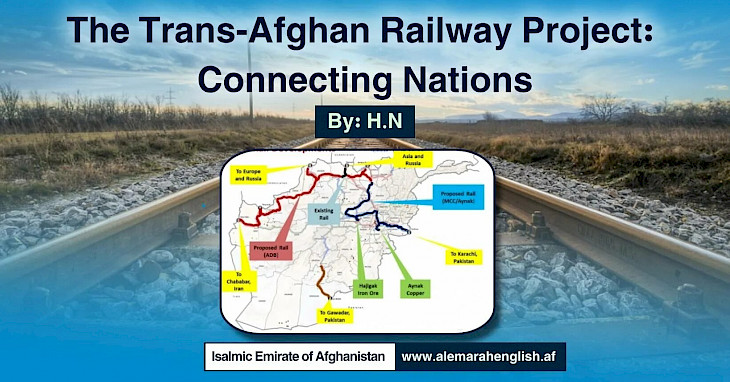
In one of the most consequential logistics developments of the quarter, the Ministries of Transport of Kazakhstan and Uzbekistan, together with the Ministry of Energy and Infrastructure of the United Arab Emirates, formally signed a trilateral Memorandum of Understanding regarding the funding, construction, and operational management of the Trans-Afghan Railway Corridor (CASA route).
The agreement establishes a framework for the immediate engineering design and financial structuring of the critical Mazar-i-Sharif–Kabul–Peshawar rail link. Crucially, the involvement of UAE investment consortiums and international logistics management entities introduces private equity, structured capital, and international risk-mitigation frameworks into a project long stalled by geopolitical uncertainty in Afghanistan. Once operational, the rail link will connect Central Asia’s internal rail grid directly to Pakistan's deep-water ports at Karachi and Gwadar. The corridor is designed to accommodate an initial throughput of 10 to 20 million metric tons of freight annually, slashing transit times from the Fergana Valley and Kazakh steppe to the Indian Ocean from 35–40 days down to a mere 3–5 days, while reducing shippers' transport costs by nearly 40%.
Uzbekistan and the United States Hold Inaugural Logistics Forum
Simultaneously expanding its Western economic vector, Uzbekistan convened the first joint Uzbekistan–US Transport and Logistics Forum in Washington D.C. The event brought together Uzbek trade representatives, US State Department officials, and senior executives from major American logistics and tech corporations. Discussions focused on integrating digital customs platforms, deploying advanced tracking technology along the Middle Corridor (Trans-Caspian International Transport Route), and establishing direct air-cargo linkages between Tashkent and major North American distribution hubs. The forum highlighted Washington's growing commitment to underwriting trade infrastructure that bypassing unilateral choke points, cementing Uzbekistan's role as a primary logistical nexus in Central Eurasia.
2. Investment & Macroeconomics: Attracting Capital and Energy Diversification
Sovereign finance, industrial modernization, and energy security dominated economic headlines across Ashgabat, Tashkent, Bishkek, and Astana.
Ashgabat Host TIF 2026: Middle Eastern and European Capital Convergence
From October 1–2, Ashgabat hosted the landmark Turkmenistan Investment Forum (TIF 2026), timed to coincide with celebrations marking 35 years of Turkmen independence. The forum attracted major international delegations, state investment funds, and global energy conglomerates. Turkmen state authorities presented multi-billion-dollar tenders focusing on the expansion of processing capabilities at the Galkynysh gas field, the monetization of petrochemical derivatives, and the strategic rollout of renewable energy infrastructure. TIF 2026 marked a clear shift in Ashgabat's economic strategy—moving from passive resource export toward active integration with global private equity and international technology suppliers.
Strategic Energy Alliances and Industrial Investments
Across the region, macroeconomic developments highlighted a rapid pace of capital attraction:
-
Astana and Berlin Strategic Energy Dialogue: Kazakhstan and Germany expanded their bilateral strategic partnership in energy and critical raw materials. Discussions focused on green hydrogen production in western Kazakhstan, industrial rare-earth processing, and securing long-term crude supplies for German refineries via non-Russian corridors.
-
Uzbekistan Secures C-390 Millennium Air Mobility Assets: Demonstrating its multi-vector defense and dual-use industrial policy, Uzbekistan received its first Embraer C-390 Millennium tactical transport aircraft, signaling a major modernization of its military air-lift and disaster-response capabilities using advanced Western-standard platforms.
-
Regional Industrial Projects: In Uzbekistan, Karakalpakstan attracted over $400 million in direct foreign investments targeted at industrial manufacturing and agricultural processing. In Kyrgyzstan, state planners unveiled a $1 billion project to construct a high-capacity pharmaceutical industrial complex designed to substitute imported medicine across the Eurasian Economic Union (EAEU).
3. Defense, Governance, and Regional Security Coordination
As geopolitical pressures shift along Eurasia's periphery, Central Asian governments over the past week enacted decisive internal defense reforms and strengthened localized security coordination.
Leadership Rotations in Kazakhstan's Defense Ministry
President Kassym-Jomart Tokayev enacted a significant leadership reshuffle within the Ministry of Defense of Kazakhstan, dismissing three top-ranking senior military officials. The personnel adjustments coincided with sweeping audits of defense procurement, asset readiness, and logistics management. Analysts note that Astana is prioritizing operational efficiency, fiscal accountability, and rapid response capabilities as Kazakhstan navigates complex security imperatives along its extended frontiers.
Trilateral Border Security and Strategic Groundwater Monitoring
Security and environmental resilience were managed through close intra-regional alignment:
-
Southern Border Alignment: Defense and border guard commanders from Kazakhstan, Kyrgyzstan, and Tajikistan held joint consultations to coordinate border surveillance, anti-smuggling protocols, and counter-narcotics operations along southern perimeter sectors.
-
Tajikistan Elevates Groundwater Monitoring: Addressing long-term climate vulnerabilities and regional water security, Tajikistan launched a comprehensive national program to modernize groundwater tracking networks. The initiative, supported by international technical agencies, aims to protect vital aquifer systems in the Pamir basin, ensuring agricultural stability and downstream hydro-energy efficiency across neighboring states.
4. Bilateral Diplomacy: Institutionalizing Peace and Neighborhood Ties
The week featured important steps toward full political and economic normalization among Central Asian neighbors.
Kyrgyzstan–Tajikistan Diplomatic Normalization Gains Momentum
In Dushanbe, Minister of Foreign Affairs of Tajikistan Sirojiddin Muhriddin formally received Nazarali Aripov, the newly appointed Plenipotentiary Ambassador of Kyrgyzstan to Tajikistan. The meeting signaled the near-total normalization of diplomatic and economic relations following historic border demarcation agreements. Discussions focused on reopening border crossing points to commercial traffic, restoring bilateral trade volumes, and institutionalizing joint water-management mechanisms along shared river systems.
US–Tajikistan Reintegration and Civil Security Dialogue
Tajikistan and the United States expanded their bilateral engagement on civil security and post-conflict stability. US agencies continued to assist Dushanbe in programs focused on reintegrating returning families from conflict zones, strengthening community resilience, and upgrading border control capabilities along the Tajik-Afghan frontier.
Strategic Analysis & Weekly Outlook
The events of September 27 to October 4, 2026, demonstrate that Central Asia is executing a remarkably coherent, pragmatic policy model:
-
Capital and Route Diversification: By securing Emirati investment for the Trans-Afghan corridor, partnering with US logistics firms, and expanding energy contracts with Germany, Central Asian capitals are systematically reducing strategic over-reliance on any single foreign power.
-
Operational Pragmatism Over Rhetoric: Whether through Uzbekistan’s defense acquisitions, Kazakhstan’s military governance reforms, or Tajikistan’s water-monitoring networks, the region is focusing on tangible institutional mechanics.
-
Consolidation of Intra-Regional Peace: The deepening diplomatic trust between Bishkek, Dushanbe, Tashkent, and Astana provides a stable domestic foundation for Central Asia to act as a unified, sovereign entity on the global stage.
CentralasianLIGHT.org
October 4, 2026