
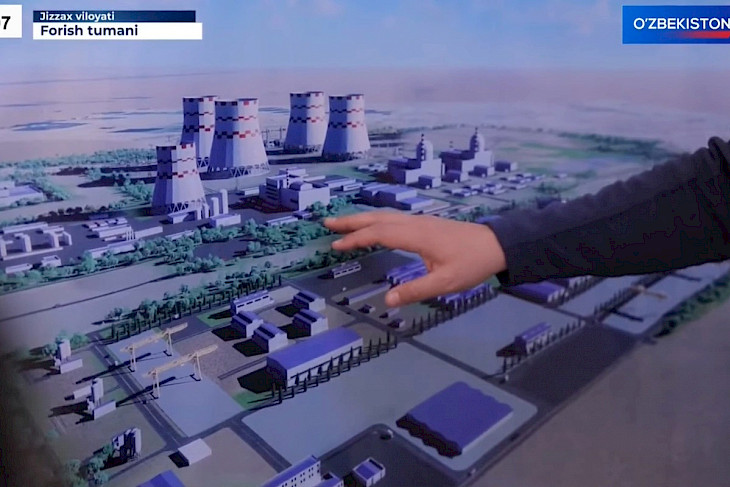
The Atomic Energy Agency of Uzbekistan has denied reports of a delay in the construction of the country's first nuclear power plant, calling the December 2026 date a "conservative scenario," Gazeta.uz reports.
Discussion surrounding the strategic project's implementation schedule arose after the publication of the draft state program for 2026. The document states that the "first concrete" stage—the actual start of construction of the reactor building—is scheduled for December. This is at odds with earlier statements by the agency's head, Azim Akhmedkhadzhayev, who reported to the president in August about plans to begin work as early as March 2026.
In an official statement, Uzatom emphasized that the previously announced targets remain valid. The December date reflects a highly cautious approach, taking into account the completion of all mandatory licensing procedures and safety assessments.
According to the project documents, 2026 will be a decisive year for the preparatory phase. The following is planned for the year:
Signing a supplementary agreement with the Rosatom State Corporation, allowing for the redesign of the plant to accommodate a combination of VVER-1000 and RITM-200N reactors.
Commissioning of the first phase of the construction and installation facility directly at the site in the Jizzakh Region.
Obtaining a construction license following the review of the safety analysis report.
Concluding a long-term nuclear fuel supply agreement.
Uzbekistan intends to implement an unprecedented global development: co-locating a large nuclear power plant and a small nuclear power plant (SNPP) on a single site. The combined capacity of the integrated facility will be 2,110 MW.
According to experts, this configuration will provide the most cost-effective electricity generation option. After the full commissioning of all power units between 2029 and 2035, nuclear power will meet up to 15% of the country's energy needs, generating 16-17 billion kWh annually.
Uzatom emphasized that compliance with international radiation safety standards remains a priority, and pouring operations will begin only after receiving a full package of permits.
CentralasianLIGHT.org
January 26, 2026