
DUSHANBE — The Government of Tajikistan has approved the State Program for Development of the Transport Complex for 2026–2030, aimed at transforming the country into a full-fledged regional transit hub. Total financing will amount to approximately 19.2 billion somoni ($2 billion), Asiaplus.tj reports.
The bulk of financing will come from external partners and the private sector:
|
Source |
Amount (million somoni) |
Share |
|---|---|---|
|
International partners |
16,510 |
~86% |
|
Private sector |
2,480 |
~13% |
|
State budget |
189.5 |
~1% |
Thus, the government is betting on attracting investment and developing public-private partnerships. Part of the state contribution will be delivered through tax and customs incentives.
The program envisages large-scale infrastructure modernization:
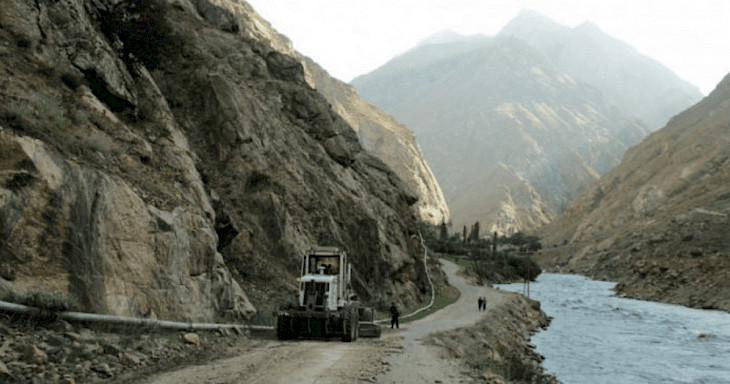
- Construction and reconstruction of up to 700 km of roads;
- Development of the railway network, including connections with China, Kyrgyzstan, and Afghanistan;
- Creation of modern logistics centers;
- Introduction of digital solutions in customs and transport procedures.
Program authors note several issues requiring attention:
- Underdeveloped railway links with neighboring countries;
- Shortage of modern logistics centers and border infrastructure;
- Aging rolling stock and road surfaces;
- High transport costs and shortage of IT specialists;
- Low levels of digitalization and public electric transport development.
Expected results by 2030:
|
Indicator |
Target growth |
|---|---|
|
Freight transport |
+26.8% |
|
Freight turnover |
+28.5% |
|
Passenger transport |
+28.5% |
|
Electric transport development |
+24.7% |
Additional goals include reducing transport costs, improving service quality, and fully transitioning to electronic exchange of customs data.
Special emphasis is placed on digital transformation: a unified transport management platform and GPS vehicle monitoring are being introduced. These measures are expected to enhance transparency, accelerate logistics, and reduce corruption risks.
Between independence and 2025, Tajikistan reconstructed 2,407.8 km of roads, 274 bridges, and 7 tunnels; 58 projects worth over $2.2 billion were implemented in the transport sector.
Key risks identified by program authors include potential delays in funding disbursement and untimely implementation of activities, which could affect target achievement.
Experts note: the program's success depends on the ability to attract investment, accelerate digitalization, and systematically address accumulated infrastructure challenges. If implemented as planned, Tajikistan could become an important transit bridge between South and Central Asia.
CentralasianLIGHT.org
March 18, 2026