
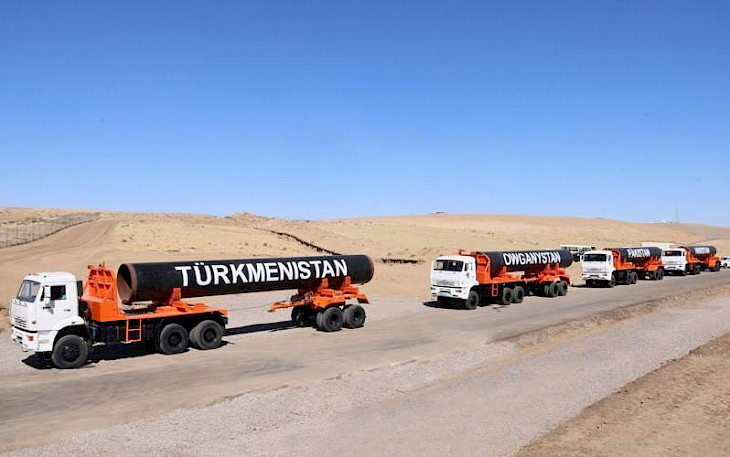
The implementation of the Turkmenistan–Afghanistan–Pakistan–India (TAPI) gas pipeline will give Ashgabat direct access to one of the world's largest and fastest-growing energy markets—South Asia. According to National Leader of the Turkmen People Gurbanguly Berdimuhamedov, once completed, TAPI will be able to provide energy resources for decades to a country with a combined population of approximately two billion people, Turkmenportal.com reported.
Diversifying export routes is of strategic importance for Turkmenistan. Currently, a significant portion of Turkmen gas is oriented toward a limited number of markets and routes, so TAPI potentially reduces dependence on traditional export routes and strengthens the country's position as an independent supplier in the South Asian market.
The project's economic impact is particularly significant. The new route has the potential to provide Turkmenistan with long-term export revenues, while transit countries will receive additional revenue from gas transportation. For Afghanistan, TAPI's significance is even broader: infrastructure construction, the creation of over 12,000 jobs, and the prospect of transit revenues could contribute to the country's economic integration with neighboring states.
For Ashgabat, the project is also part of a broader strategy of transforming energy potential into a tool for regional diplomacy. The parallel development of gas and electricity projects allows Turkmenistan to strengthen its position as a key energy hub in Central Asia and neighboring regions.
However, TAPI's strategic potential will only be realized if security, financing, and sustainable transit through Afghanistan are addressed. Therefore, for Turkmenistan, the project's success means more than just building a gas pipeline; it means creating a long-term energy corridor capable of diversifying exports, increasing foreign exchange earnings, and strengthening the country's geo-economic importance.
CentralasianLIGHT.org
September 3, 2026