
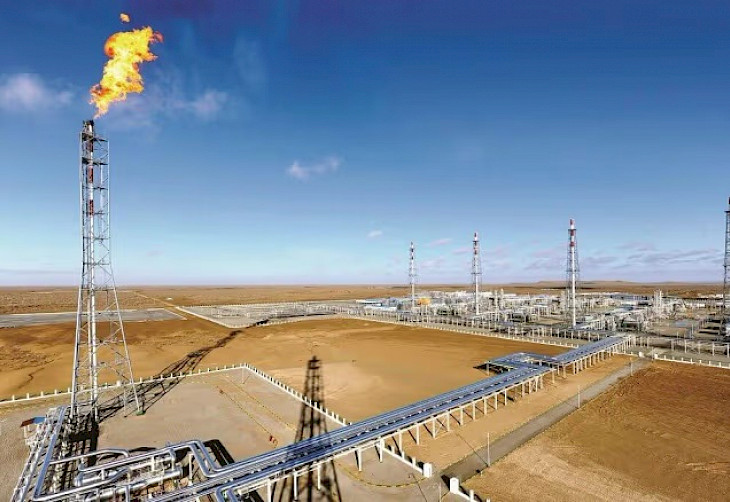
In 2025, natural gas production in Turkmenistan’s Lebap velayat reached nearly 21 billion cubic meters, while local oil and gas enterprises produced more than 440,000 tons of gas condensate since the beginning of the year, the regional newspaper Türkmen gündogary reports. Over the reporting period, the region also exported more than 4 billion cubic meters of natural gas.
Lebap’s enterprises are showing steady growth in hydrocarbon processing. More than 510,000 tons of crude oil were processed, over 120,000 tons of diesel fuel were produced, around 230,000 tons of gasoline, and more than 22,000 tons of petroleum bitumen. Year-on-year growth rates across key products ranged from 5% to 19%, while liquefied gas production increased by 9%, reaching 43,000 tons. Infrastructure development has also intensified: Lebapgazüjünçilik laid 42.4 kilometers of new gas pipelines, mainly to rural settlements.
Comparison with Other Regions
In terms of scale, Lebap remains an important supplier, though it is not the country’s sole leader at the national level. The Galkynysh (South Yolotan) field is considered the largest in terms of reserves and potential output, providing the core volume for prospective exports and playing a key role in Turkmenistan’s strategy to supply gas to China and other foreign markets. A number of fields in the Mary velayat, including Dauletabad and other deposits in the Amu Darya basin, together make a comparable contribution to national production, while some western regions and the Caspian basin are primarily focused on gas condensate and oil flows.
By product mix, Lebap stands out for its relatively high share of condensate and on-site processing. This distinguishes the velayat from areas dominated by “dry” natural gas or infrastructure largely oriented toward exporting unprocessed volumes via major cross-border pipelines.
Significance and Outlook
Rising production and processing in Lebap are strengthening the region’s energy base and generating additional export revenues. The expansion of local gas pipeline networks and processing facilities enhances domestic energy resilience and supports the development of related industries. At the same time, sustaining growth will require continued exploration and investment programs, as well as alignment of production plans with the national strategy for balancing gas exports and domestic consumption.
CentralasianLIGHT.org
December 15, 2025