
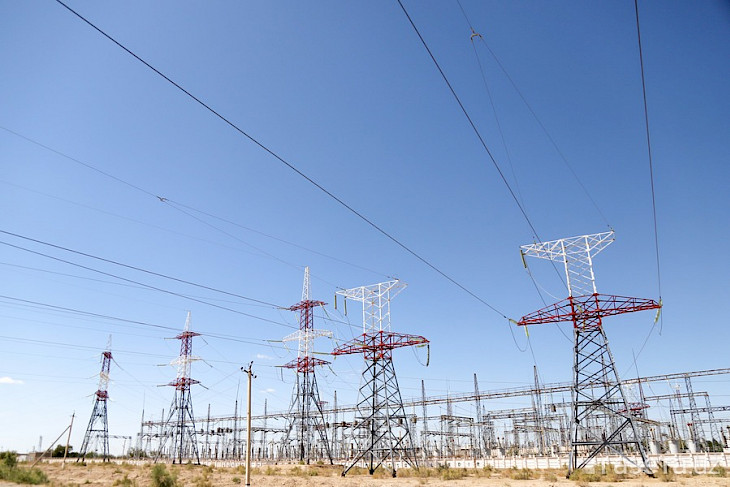
At a meeting on February 23, Uzbek President Shavkat Mirziyoyev set the task of accelerating the construction of trunk power lines and the modernization of distribution networks. He emphasized the critical importance of ensuring timely delivery of electricity to consumers while expanding generating capacity, Gazeta.uz reports.
Without expanding high-voltage networks, there is a risk of an imbalance between energy production and consumption. At the same time, low utilization of funds allocated for infrastructure development last year was noted.
Priority includes completing the Talimarjan-Sughdiyona, Syrdarya-Khalka, and Karakul-Nurabad (602 km) lines, as well as launching the Yangi Angren-Namangan project by 2030. In Tashkent, construction of 75 km of high-voltage lines, five substations, and the modernization of over 700 km of networks are planned.
To improve the Fergana Valley's power supply, integration with neighboring power systems will be accelerated, including the construction of the Surkhan-Puli-Khumri power transmission line to Afghanistan.
According to the Ministry of Energy of Uzbekistan, of the 12,500 kilometers of main 110-500 kV transmission lines, approximately 32% require modernization; 28% of the 91 substations are considered obsolete. Over four years, $803.4 million was invested, 1,310 kilometers of lines and 9 substations were built. Investments continued in 2025: $142.1 million, with 1,952 MVA of new capacity commissioned.
The management of National Electric Grids announced a scientific approach to reducing losses: experts will be dispatched to the regions to audit each substation. Regional Electric Grids is implementing a system for tracking every kWh—from generation to consumer—to eliminate losses and stabilize voltage during peak hours.
CentralasianLIGHT.org
February 24, 2026