
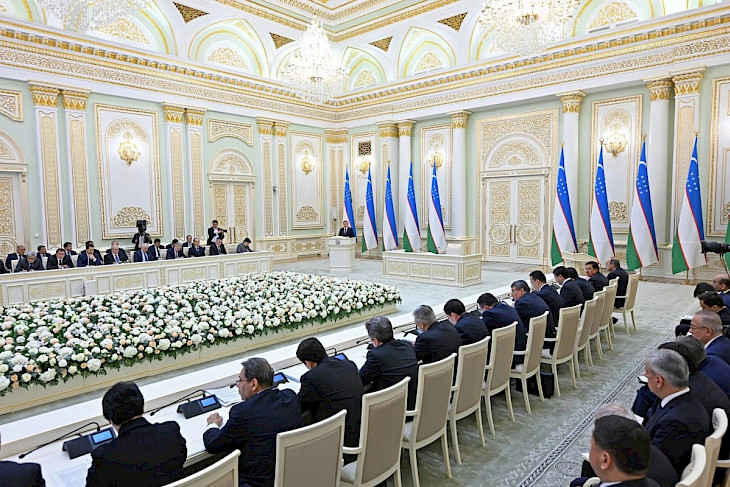
At a meeting in Uzbekistan dedicated to expanding Uzbekistan's export potential and improving the effectiveness of diplomatic missions abroad, it was noted that active engagement between ambassadors and foreign investors and large companies could contribute to a significant increase in the supply of Uzbek products to foreign markets, Gazeta.uz reports.
The Iraqi market, which annually imports approximately $100 billion worth of goods to meet domestic demand, was cited as a promising area. It was emphasized that this country is of significant interest to Uzbek producers. In this context, the invitation of 150 large Iraqi companies to the country was welcomed. Following their visits, preliminary agreements were reached on product deliveries this year, valued at hundreds of millions of dollars.
It was noted that representatives of foreign companies, after familiarizing themselves with the activities of Uzbek enterprises, expressed interest in establishing official distribution centers and promoting Uzbek products in Middle Eastern markets. A similar approach was proposed for cooperation with countries such as Vietnam, Bahrain, and Portugal.
Special attention was paid to the European market. Last year, Uzbekistan's exports to European countries increased by 23%, reaching $2.3 billion. However, it was noted that the potential for promoting Uzbek brands is not yet fully utilized in a number of European countries.
The meeting also discussed opportunities to expand chemical exports, particularly mineral fertilizers. France was identified as a potentially important market for companies in several regions of Uzbekistan. In this regard, diplomatic missions were instructed to study the requirements of the French market, disseminate relevant information to producers, and facilitate the organization of industry exhibitions. The development of a separate program to increase fertilizer exports to agriculturally developed European countries is envisaged.
In the agricultural sector, international experience in adapting to climate change and water scarcity was discussed. Spain, where a large greenhouse complex using renewable energy sources operates in the Almeria region, was cited as an example. The Embassy of Uzbekistan in Spain has been tasked with exploring the feasibility of implementing similar technologies in certain regions of the country.
Furthermore, attention was drawn to the experience of the Netherlands, one of the world's leading agricultural exporters. In particular, the work of the World Horti Center, an innovation and educational center, was noted. The Embassy of Uzbekistan in Belgium has been tasked with organizing a study tour for a group of Uzbek specialists to study best practices in greenhouse farming.
CentralasianLIGHT.org
January 16, 2026