
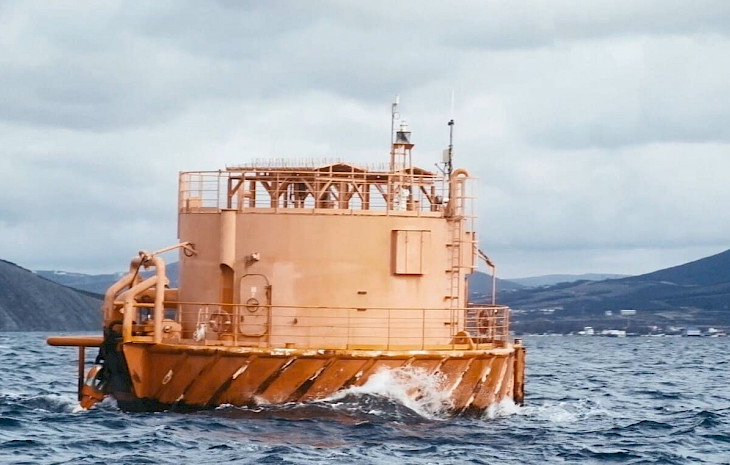
Kazakhstan is being forced to accelerate the diversification of its export routes after a Ukrainian drone attack on Remote Mooring Point No. 2 of the Caspian Pipeline Consortium (CPC) terminal near Novorossiysk, Ritmeurasia.ru reports.
For Kazakhstan, the CPC remains a vital artery: more than 80% of the country’s oil exports pass through this route, and any disruptions immediately reduce throughput capacity and increase supply risks.
Due to damage caused by the drone strike, part of the mooring infrastructure was temporarily taken out of service, although limited loading operations at the terminal have already resumed. According to industry sources, repair work is ongoing and may take several weeks, as the damaged components must be replaced and weather conditions in the Black Sea are complicating access to the site.
Amid the uncertainty, Kazakhstan is increasing the volume of oil pumped through alternative export channels. In December, the country will boost shipments via the Baku–Tbilisi–Ceyhan (BTC) pipeline, sending about 188,000 tons of oil (roughly 47,000 barrels per day) through the port of Aktau — a 30% increase from November. Of this volume, 170,000 tons will come from Tengizchevroil, while another 18,000 tons will be supplied by operators of the Kashagan field.
However, the BTC route remains limited in capacity: Aktau port is operating near its maximum load, and the crude quality must strictly meet pipeline specifications. Increasing exports will require either additional infrastructure investments or redistribution of volumes among companies.
Other export options — through the Russian ports of Novorossiysk and Ust-Luga, as well as via the Druzhba pipeline — are currently less attractive. Russia’s Transneft system continues to operate under heavy load following a series of drone attacks and temporary shutdowns of several facilities. As a result, opportunities to accept additional Kazakh volumes are very limited. In December, only about 140,000 tons may be added to shipments through Ust-Luga, which does not compensate for CPC’s reduced capacity.
Another factor of uncertainty is the deteriorating security situation around critical infrastructure in the Black Sea. Analysts note that in 2025 Kazakhstan may accelerate negotiations with Azerbaijan to expand quotas for BTC shipments and intensify efforts to develop the Trans-Caspian route within the Middle Corridor.
CentralasianLIGHT.org
December 5, 2025