
Overview
The third week of October 2026 was marked by significant events across Central Asia. Regional governments focused on balancing internal economic challenges with strategic foreign policy, international legal disputes, and major infrastructure investments.
During this period, Kazakhstan faced mixed results in international arbitration while expanding its Caspian transport capacity. Kyrgyzstan saw a massive surge in gold export revenues alongside new trade digitalization grants. Tajikistan struggled with a steep drop in textile production while securing social grants. Uzbekistan deepened its institutional cooperation with the Eurasian Economic Union while tracking demographic shifts, and Turkmenistan advanced methane reduction initiatives with European support.
Kazakhstan: Hague Arbitration Ruling and Port Kuryk Investment
In international arbitration news, the International Court of Arbitration in The Hague rejected approximately 12 billion dollars of Kazakhstan’s 20 billion dollar financial claims against foreign partners in the North Caspian Operating Company, which develops the Kashagan oil field. The tribunal ruled that the statute of limitations had expired for claims covering the period from 2011 to 2015. However, Kazakhstan’s remaining claims of around 8 billion dollars remain active. The decision highlights the complexities of state efforts to revise historical production sharing agreements.
On the logistics front, Kazakhstan’s national development holding Baiterek signed an investment memorandum worth 1 billion dollars to modernize the Caspian Sea port of Kuryk. The initiative includes dredging, expanding terminal capacity, and upgrading digital operations to strengthen the Middle Corridor, which connects Asian and European trade routes via the South Caucasus.
Kyrgyzstan: Surge in Gold Exports and Trade Digitalization
Kyrgyzstan reported a dramatic increase in precious metals exports. In August and September 2026, gold exports reached 741.3 million dollars. This two-month volume was 25 times higher than the total gold export earnings recorded in the entire first half of the year. High global gold prices and peak processing at key mines provided a substantial boost to the country's foreign reserves and overall fiscal stability.
Additionally, Kyrgyzstan received a grant of 114,800 dollars from the World Trade Organization Trade Facilitation Agreement Facility. The funds will be used to automate customs procedures, expand single-window electronic services, and improve efficiency at critical border crossings with neighboring countries.
Tajikistan: Textile Sector Decline and ADB Social Grants
Tajikistan’s industrial sector faced severe difficulties as domestic fabric production fell by 46.8 percent during the first nine months of 2026, dropping to 7.3 million square meters. Out of 126 ginning plants in the country, only about 45 meet international quality standards. The sector continues to suffer from aging machinery, high energy costs, and enterprise debt. As a result, fabric imports grew by 38.2 percent, primarily from China, while Tajik fabric exports dropped sharply.
To help mitigate social and economic pressures, Tajikistan secured two grants totaling 63.8 million dollars from the Asian Development Bank. The funding is targeted at modernizing rural healthcare facilities, strengthening emergency services, and expanding social protection coverage for vulnerable households and returning labor migrants.
Uzbekistan: Strategic EAEU Partnership and Demographic Trends
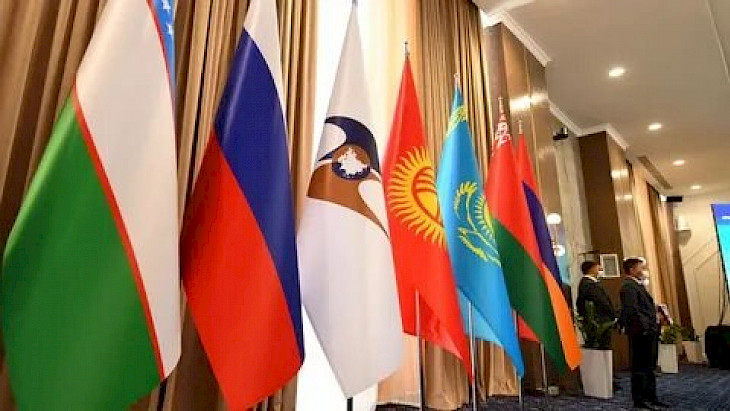
In Tashkent, President Shavkat Mirziyoyev met with Bakytzhan Sagintayev, Chairman of the Executive Committee of the Eurasian Economic Commission. Both sides agreed to draft a new medium-term Joint Action Plan to deepen economic cooperation. The initiative focuses on removing non-tariff trade barriers, simplifying customs clearances, and fostering joint industrial projects in manufacturing and agriculture.
At the same time, social data indicated a continuing decline in birth and marriage rates across Uzbekistan. Higher costs of living in urban areas, expanding educational opportunities for women, and shifting career priorities have led younger generations to delay marriage and family planning. While this trend gradually eases the immediate strain on public services, it signals a long-term shift in the country's labor force dynamics.
Turkmenistan: EU Methane Reduction Pilots and WTO Preparation
In Ashgabat, state companies Turkmengaz and Turkmennebit introduced pilot projects designed to reduce methane emissions by 40 to 60 percent at key oil and gas fields. Supported by technical and financial assistance from the European Union, the initiative uses advanced leak detection systems to align Turkmenistan's energy sector with international environmental standards, which could unlock significant economic value and attract foreign investment.
Meanwhile, Turkmenistan held joint workshops with the Asian Development Bank to prepare its private sector for eventual accession to the World Trade Organization. Training focused on trade regulation, intellectual property rights, and helping domestic companies adapt to international market competition.
Summary
The week of October 19–24, 2026, underscored Central Asia's active efforts to enhance regional integration, upgrade transport infrastructure, and secure external financing. While strategic investments and high commodity revenues provided macroeconomic support, structural challenges in manufacturing, foreign legal disputes, and social pressures remain critical areas requiring continued reform.
CentralasianLIGHT.org
Octover 25, 2026