
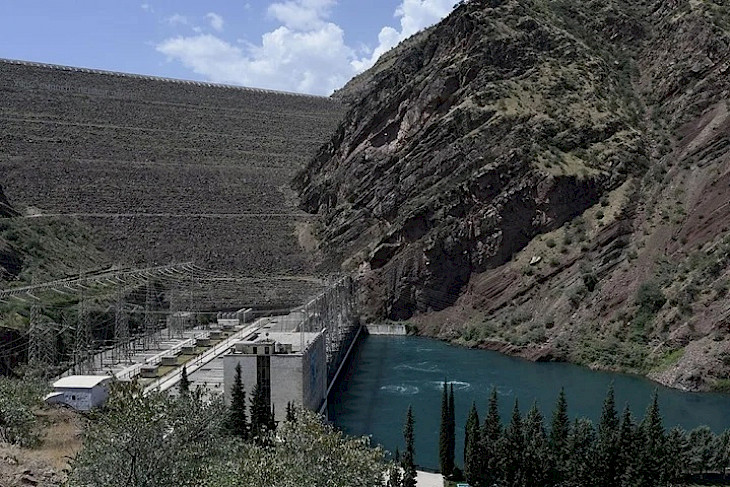
Tajikistan is considering engaging China Gezhouba Group International Engineering to build two hydroelectric power plants in the Zeravshan River basin: the 160 MW Ayni Hydroelectric Power Plant (HPP) and the 100 MW Yavan Hydroelectric Power Plant (HPP). Tajikistan's Minister of Energy and Water Resources, Daler Juma, and representatives of the Chinese company discussed the projects' prospects, Asiaplus.tj reported.
The two facilities could have a combined capacity of 260 MW, with an annual output of approximately 1.1 billion kWh of electricity. The projects are being implemented as part of Tajik-Uzbek cooperation through the joint venture TAUZ Hydro, established in 2021 to develop the hydroelectric potential of the Zeravshan River.
The Ayni HPP, a project under discussion for over 15 years, is designed to generate approximately 669 million kWh annually, while the Yavan HPP is expected to generate approximately 429 million kWh. The role of the Chinese contractor, the construction cost, and the sources of financing have not yet been determined.
Analytical Commentary
The implementation of these projects is of strategic importance for Tajikistan, which possesses one of the largest hydropower potentials in Central Asia but utilizes only a portion of its resources. The new plants will improve the stability of energy supply, increase electricity exports, and strengthen cooperation with Uzbekistan.
The Chinese company China Gezhouba Group already has significant experience participating in large-scale energy projects abroad, so its involvement could accelerate the implementation of the projects and facilitate the search for financing. However, the key question remains the project's financial model, as the construction of large hydropower plants requires significant investment and long-term guarantees.
Amid regional competition for energy resources, Central Asian countries are also actively developing hydropower. Kazakhstan, despite significant coal reserves and developing renewable energy, has limited hydropower potential: the share of hydropower in its energy mix remains significantly lower than in Tajikistan and Kyrgyzstan.
Kyrgyzstan, like Tajikistan, is placing its bets on hydropower. The country is implementing projects to build new hydroelectric power plants, including joint initiatives with foreign investors, but the pace of implementation is often hampered by funding and modernization of grid infrastructure.
Uzbekistan is actively involved in developing the region's hydroelectric resources, but unlike Tajikistan, it places greater emphasis on solar and wind energy. Joint projects on the Zeravshan River provide Tashkent with an additional source of electricity and strengthen energy cooperation with Dushanbe.
Thus, the construction of the Ayni and Yavan hydroelectric power plants could become an important element in the formation of a unified energy space in Central Asia. For Tajikistan, this represents an opportunity to expand electricity production and increase export potential, while for the region, it represents an additional step toward closer coordination in water and energy resources.
CentralasianLIGHT.org
July 28, 2026