
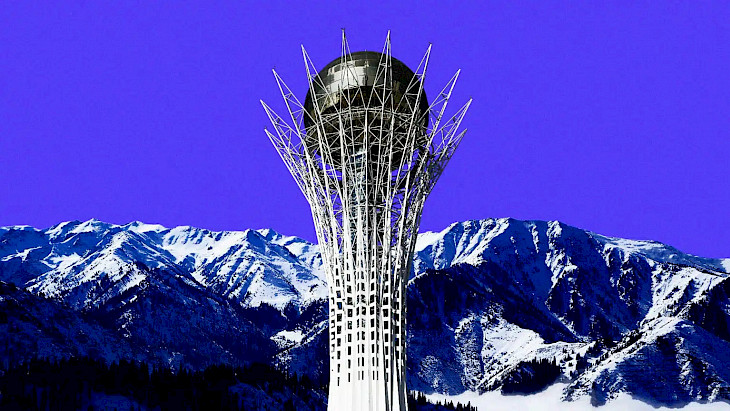
Almaty and Astana accounted for nearly 60% of all foreign direct investment (FDI) inflows into Kazakhstan in the first quarter of 2026, according to an analysis of National Bank of Kazakhstan statistics conducted by Ruslan Sultanov, an economist and author of the Tengenomika Telegram channel.
From January to March, gross FDI inflows amounted to $6.3 billion. Almaty attracted $2.1 billion, and Astana $1.7 billion. Together with the Atyrau, Zhambyl, and West Kazakhstan regions, these five regions accounted for approximately 80% of all foreign investment.
After a record $7.9 billion in the first quarter of 2023, foreign investment fell to $6.2 billion in 2024, rose to $7.1 billion in 2025, and then fell again to $6.3 billion at the beginning of this year.
The most notable growth was recorded in the mining industry, where investment inflows increased by 14% thanks to oil and gas projects. Investment also increased in trade, transportation, and warehousing, while the construction sector recovered from last year's decline. Meanwhile, investment in manufacturing fell by 11%, with the exception of food, beverage, and tobacco production, where investment volumes increased almost fivefold.
The Netherlands remains Kazakhstan's largest foreign investor, with investments of $1.2 billion, followed by Russia, the UAE, China, Qatar, and the United States. These six countries accounted for approximately 71% of total FDI inflows.
The concentration of investment in Almaty and Astana is primarily explained by the structure of the Kazakh economy and the specifics of foreign direct investment accounting. Almaty remains the country's main financial center, home to the registered offices of major banks, international companies, investment funds, and holding companies. A significant portion of financial flows passes through the city, so many investment transactions are statistically recorded here, even if the funds are subsequently channeled to other regions.
CentralasianLIGHT.org
July 3, 2026