
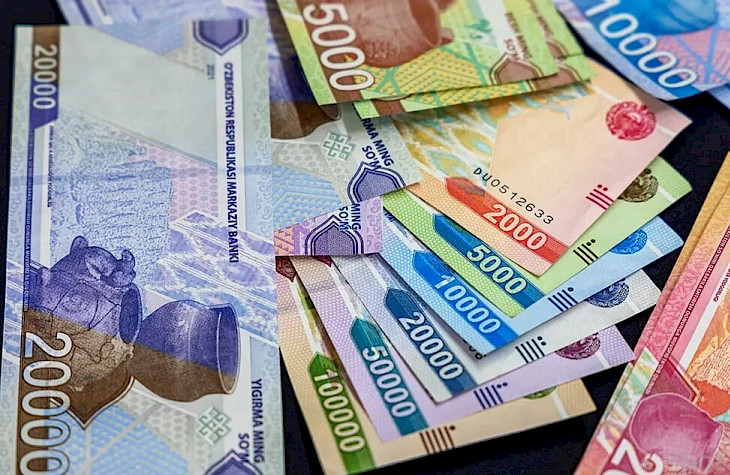
The Uzbek som remains relatively stable against the US dollar, despite short-term exchange rate fluctuations, according to Alpari analyst Anna Bodrova, according to UzDaily.uz.
Alpari is a brand of Parlance Trading Ltd, registered in the Comoros Islands (Moheli Island). It operates as an international brokerage and clearing house.
As of July 16, the dollar exchange rate was 12,038 som, up 0.48% from the previous week. According to the expert, pressure on the national currency is due to the acceleration of annual inflation to 6.4% in June following increases in electricity, gas, and fuel tariffs.
Meanwhile, Uzbekistan's gold and foreign exchange reserves amounted to $63.7 billion, and the Central Bank continues to increase its physical gold reserves, which contributes to the long-term stability of the national currency.
Analytical Commentary
Maintaining a stable exchange rate for the som is crucial for Uzbekistan's economy, which has been undergoing a period of active modernization and liberalization in recent years. A predictable exchange rate helps reduce inflation expectations, increases investor confidence, and facilitates the implementation of large investment projects. For the population, a stable som means lower risks of sharp price increases for imported goods and the preservation of purchasing power.
Unlike some countries in the region, Uzbekistan adheres to a managed floating exchange rate regime, allowing the Central Bank to smooth out sharp fluctuations without rigidly fixing the currency.
The Kazakhstani tenge remains more sensitive to global oil prices and fluctuations in external markets, while the Kyrgyz som is largely dependent on remittances, imports, and the situation on the Russian foreign exchange market.
The Tajik somoni also remains relatively stable, but its exchange rate is more dependent on the influx of remittances from labor migrants and the external economic environment. The Turkmen manat maintains a fixed official exchange rate, but its model differs significantly from the market mechanisms used by neighboring countries.
Sizable international reserves and a high volume of gold assets, which serve as additional protection against external shocks, remain key factors in the stability of the Uzbek som.
Amid ongoing global economic uncertainty, high volatility in commodity markets, and geopolitical risks, maintaining a stable national currency remains a key priority for Uzbekistan's monetary policy and a key prerequisite for continued economic growth and attracting foreign investment.
CentralasianLIGHT.org
July 16, 2026