
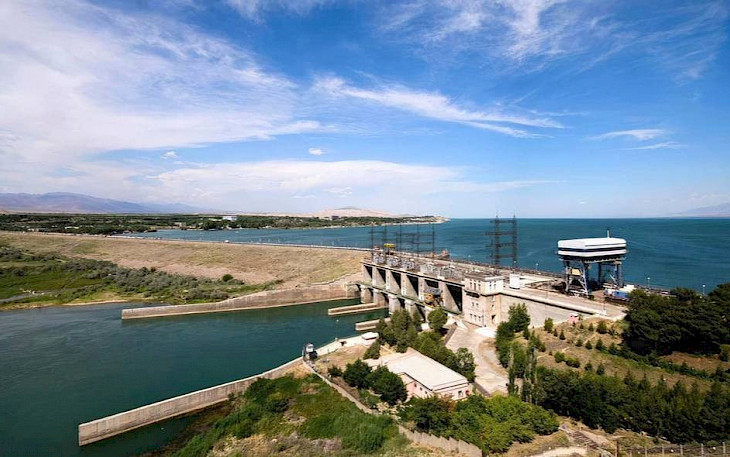
Uzbekistan, Tajikistan, and Kazakhstan have agreed on the operating mode of the Bahri Tojik reservoir for the summer of 2026, which will ensure a stable water supply to agricultural areas of the region during the peak growing season, Daryo.uz reports.
The corresponding trilateral protocol was signed in Dushanbe by the water ministers of the three countries on the sidelines of the IV UN International Conference "Water for Sustainable Development." Uzbekistan was represented at the talks by Water Minister Shavkat Khamroyev.
For Uzbekistan, the effective management of transboundary water resources is of strategic importance. The country remains the largest water consumer in Central Asia, using over 54 billion cubic meters annually, a significant portion of which is used for agriculture and irrigation. In accordance with previously reached regional agreements, in 2026, Uzbekistan is expected to receive 22 billion cubic meters of water from the Amu Darya and over 3.3 billion cubic meters from the Syr Darya.
In recent years, Tashkent has been actively promoting regional cooperation in the water sector, viewing it as a key factor in food security and sustainable development throughout Central Asia. This work has become particularly relevant given climate change, growing agricultural needs, and periodic water shortages in the region's largest reservoirs.
The Bahri Tojik Reservoir, located in Tajikistan's Sughd Region, plays a vital role in providing water to Tajikistan, Uzbekistan, and Kazakhstan. Its coordinated operation minimizes the risk of water shortages, maintains stable agricultural production, and strengthens regional cooperation mechanisms in water management.
Following the meeting, the parties confirmed their commitment to further develop cooperation and coordinate actions to ensure the rational use of shared water resources, which remains a key area of regional integration in Central Asia.
CentralasianLIGHT.org
May 26, 2026