
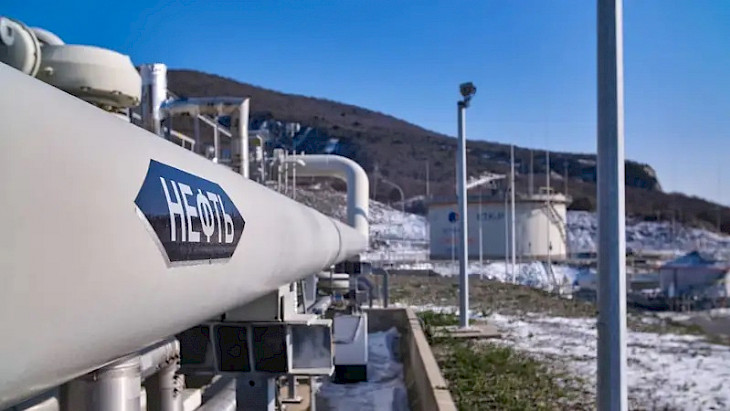
Oil production in Kazakhstan has fallen significantly following the shutdown of the Caspian Pipeline Consortium (CPC) marine terminal on Russia's Black Sea coast.
The reception of Kazakh oil was halted following the suspension of operations at the export terminal, which had previously been the target of drone attacks, Reuters reported.
The most significant decline was recorded at the country's largest oil and gas field, Tengiz. According to Reuters sources, average daily production there has more than halved, from 925,000 barrels per day in July to approximately 406,000 barrels per day. As a result, total oil and gas condensate production in Kazakhstan has fallen to 1.63 million barrels per day, compared to an average of 2.07 million barrels per day in July.
CPC remains a key export route for Kazakhstan, handling over 80% of the country's oil exports. According to industry estimates, the consortium transports nearly 2% of global oil supplies, so any disruptions to its operation impact not only the Kazakh oil sector but also the international energy market.
The situation has once again demonstrated Kazakhstan's critical dependence on the CPC infrastructure. For the country, this means not only reduced production volumes and export revenues, but also the need to accelerate the development of alternative supply routes through the Caspian Sea, the South Caucasus, and other destinations.
For the consortium partners, the pipeline's stable operation is of strategic importance, as it remains the most efficient and cost-effective channel for delivering Kazakh oil to global markets.
For the global oil market, the CPC shutdown has become yet another factor increasing risks to global supply chains. Although the lost volumes can be partially offset by production from other producers, reduced exports through a route that accounts for approximately 2% of global oil supply could increase price volatility.
Amid ongoing geopolitical tensions, the market is increasingly sensitive to any disruptions in key energy infrastructure, increasing the risk premium on oil prices and encouraging importers to further diversify their supply sources.
CentralasianLIGHT.org
July 24, 2026