
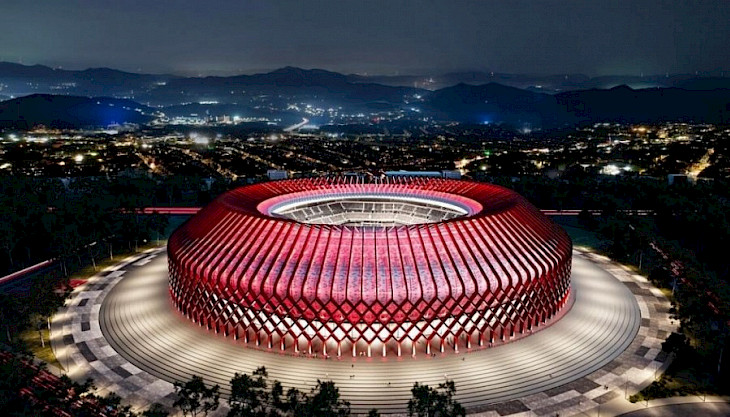
Kyrgyz Presidential Press Secretary Askat Alagozov stated that the actual cost of constructing the Bishkek Arena stadium was $386 million. He refuted earlier reports that the facility would cost $60 million, noting that this figure was initially discussed for a stadium with a capacity of 30,000–35,000 spectators.
At the direction of President Sadyr Japarov, the project was significantly expanded: the capacity was increased to 51,200 seats, and the complex now includes commercial infrastructure—shops, a supermarket, restaurants, cafes, cinemas, sports fields, and children's playgrounds. The total area of the facility is 194,200 square meters, and the land area is approximately 20 hectares.
Alagozov emphasized that the cost was influenced by engineering requirements, seismic resistance, metal structures, building materials, logistics, and inflation. The president also ordered the creation of a commission, including the Accounts Chamber, to review the costs and subsequently publish the results.
For international comparison, it's significant that modern arenas of comparable capacity are significantly more expensive. The 65,000-seat Allegiant Stadium in the United States cost approximately $1.9–$1.97 billion, the 62,850-seat Tottenham Hotspur Stadium in England cost approximately $1.2–$1.33 billion, and the 55,000-seat National Stadium in Singapore cost approximately $1.31 billion.
Thus, the stated cost of the Bishkek Arena is significantly lower than many major global stadiums of comparable capacity. However, a definitive assessment of the project's effectiveness will be possible only after an independent audit and analysis of the complex's future revenues. The main requirement for the builders, as set by President Sadyr Japarov, was that the stadium be self-supporting after commissioning, without relying on government support.
CentralasianLIGHT.org
September 8, 2026