
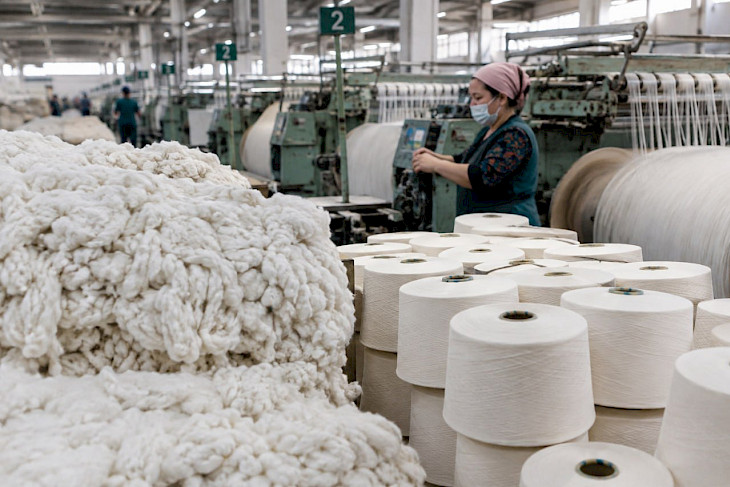
In Tajikistan, over the nine months of 2026, fabric production fell by 46.8% compared to the same period last year, amounting to 7.3 million square meters, Asiaplus.tj reported.
Against the backdrop of a decline in domestic production, imports of foreign fabrics increased by 38.2% (to 20.1 thousand tons), mainly due to supplies from China and Uzbekistan, while exports fell by 66.9%.
The industry faces significant technological and financial difficulties: out of 126 cotton ginning enterprises in the republic, only 45 meet quality standards, and a number of textile factories ended up on the balance sheet of the Ministry of Finance due to debts. The situation is aggravated by high electricity tariffs, limited access to preferential loans and a shortage of qualified personnel.
The decline in the textile industry demonstrates the vulnerability of Tajikistan’s strategy for deep processing of raw materials in the absence of systemic modernization of enterprises. The increase in imports of finished fabrics leads to the displacement of local producers from the domestic market and loss of foreign exchange earnings.
To overcome the crisis, the country needs to accelerate the attraction of foreign investors in the creation of vertically integrated full-cycle clusters, conducting a technical audit of processing facilities and introducing preferential tariff conditions for the textile sector.
CentralAsianLIGHT.org
October 23, 2026