
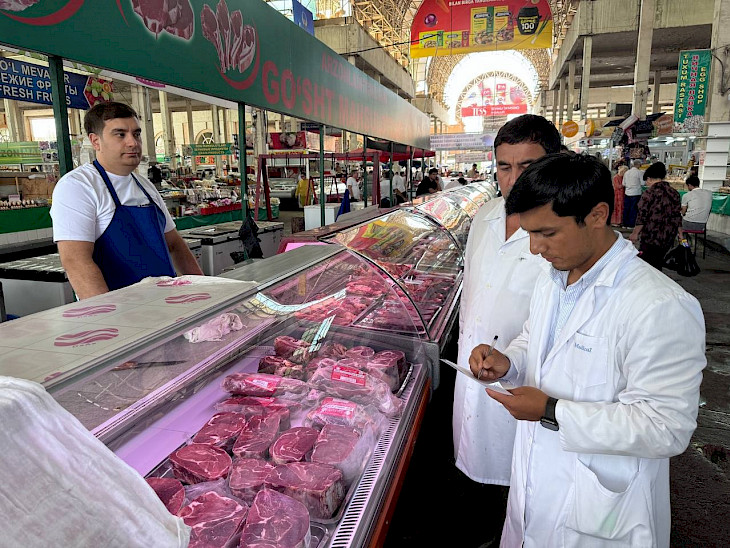
From January to June 2026, Uzbekistan imported 72,000 tons of beef worth $359.5 million, an increase of 6,000 tons, or 9.1%, compared to the same period last year, Daryo.uz reported.
The main suppliers were India (33,900 tons), Belarus (19,600 tons), and Kazakhstan (10,600 tons). Another 8,000 tons came from Pakistan and other countries.
The increase in imports is due to increased domestic demand due to population growth, tourism, and food consumption. The country's annual meat requirement is approximately 2.15 million tons, while domestic production reaches 1.6 million tons. The shortfall is compensated by external supplies.
To increase production, the government is implementing a livestock development program for 2026–2028, with a planned allocation of $463 million. Modernization of the industry and expansion of livestock breeding are expected to increase meat production by an additional 190,000 tons per year. Importers will also receive partial compensation for transportation costs when supplying meat and breeding stock.
The increase in meat imports demonstrates that Uzbekistan faces a challenge typical of rapidly growing economies: domestic production is not fully keeping pace with increasing demand. With a population of over 39 million, the country remains the largest market in Central Asia, making food security a strategic priority.
Compared to its neighbors, Uzbekistan has higher demand due to its population size, while Kazakhstan has the largest livestock potential in the region and is one of the leading suppliers of meat. Kyrgyzstan also has a developed livestock industry, but its export potential is limited by smaller production volumes. Tajikistan and Turkmenistan, like Uzbekistan, are working to increase domestic production to reduce dependence on imports.
For Tashkent, imports remain a short-term solution to stabilize the market, but the long-term goal is to develop domestic livestock production. Investments in breeding farms, feed supplies, processing, and modern technologies should increase the sector's productivity.
At the same time, growing demand in Uzbekistan creates opportunities for regional cooperation. Kazakhstan and Kyrgyzstan can strengthen their positions as suppliers of livestock products, while Uzbekistan can develop processing and become the largest market in Central Asia.
Thus, the increase in beef imports reflects not only rising consumption but also a large-scale transformation of Uzbekistan's agricultural sector. The country's main goal is to use imports as a temporary tool, while simultaneously creating conditions for sustainable growth in domestic production.
CentralasianLIGHT.org
August 7, 2026