
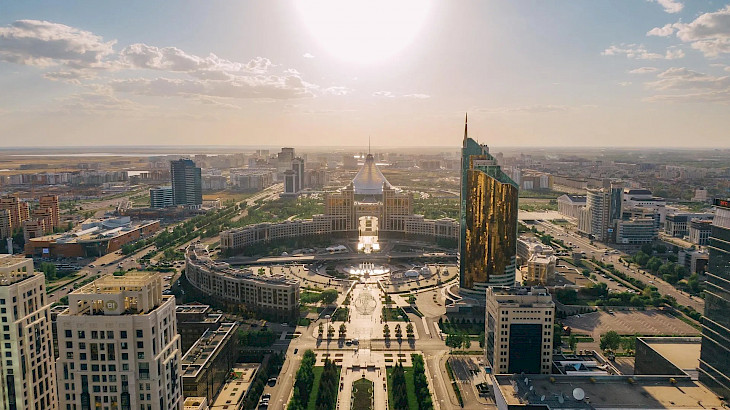
On August 28, Kazakh President Kassym-Jomart Tokayev opened the first session of the country's new parliament, the Kurultai (Republic of Kazakhstan). Addressing the deputies, he declared that Kazakhstan had entered a period of profound institutional and economic transformations, which, he said, had already become irreversible, Zakon.kz reports.
Tokayev noted that the formation of a new world order is accompanied by both serious risks and technological opportunities. Under these conditions, the president emphasized, the success of states will depend on their ability to strengthen economic and political sovereignty, develop science and human capital, and adapt to new global realities.
Tokayev paid special attention to domestic reforms. He stated that the "dynamics and scale" of transformations in Kazakhstan have reached the point of irreversibility, so "there is no turning back." The president linked this reform agenda to the need to proactively respond to global challenges, not just address their consequences.
An important practical outcome of the first session was the election of the Kurultai's chairman. Deputies elected Aibek Dadebai, a candidate previously nominated by Tokayev, by secret ballot. Dadebai received the support of the deputies and became the head of the new legislative body. Previously, he held a number of senior government positions, including head of the Presidential Administration, and in May 2026, he led the Adilet party, which won the Kurultai elections.
Tokayev also announced the upcoming formation of a new executive vertical: after the Kurultai structure is approved, he will nominate candidates for vice president and prime minister, after which members of the government will be appointed.
Tokayev's statements demonstrate that the president views the current political transformation not as a separate constitutional overhaul, but as a long-term model for modernizing the state. The transition to a unicameral parliament and the election of a new speaker create a new institutional configuration.
At the same time, the concentration of key political decisions around the presidential team means that the effectiveness of reforms will now be assessed not so much by the scale of changes, but by their ability to ensure economic growth, improve public welfare, and strengthen trust in new state institutions.
CentralasianLIGHT.org
August 28, 2026